Material intelligence5 min read
The Last Craftsmen of the Mid-Century Modern House
The drawings of the great postwar houses survive in archives. The people who knew how to build them are harder to find.
An architect leaves drawings. A trade leaves habits, and habits are the hardest thing to archive.
Open a flat file of Mid-Century Modern drawings and you will find the steel window drawn once, to scale, with a line for the mullion and a callout for the finish. What you will not find is the sequence: how the frame was cut, how the glass was set, how the joint was made to look as though nobody had touched it. That knowledge lived in a shop, in the hands of a person who had learned it from another person.
This is a piece about those trades: plasterers, terrazzo workers, window fabricators and finish carpenters, who now have to be found, one project at a time, by anyone restoring a postwar house. It is also about a smaller, more reassuring fact. Some drawings did survive, and a house can still be rebuilt from them if someone who can read them and someone who can build from them are in the same room.
The plaster that was a skill, not a product
Plaster shows how a craft slips away. The National Park Service’s Preservation Brief on flat plaster says plaster “was the wall surface chosen for nearly all buildings until the 1930s or 40s.” Rock lath, a gypsum base, was in use as early as 1900, and by the late 1930s it was used almost exclusively in residential plastering.
The Brief is plain about what the work asks of a person: “Plastering is a skilled craft, requiring years of training and special tools.” A skill that takes years to learn only survives if someone keeps hiring it. A wall is a recipe, and recipes are lost when nobody cooks them.
Terrazzo, from Venice to Los Angeles
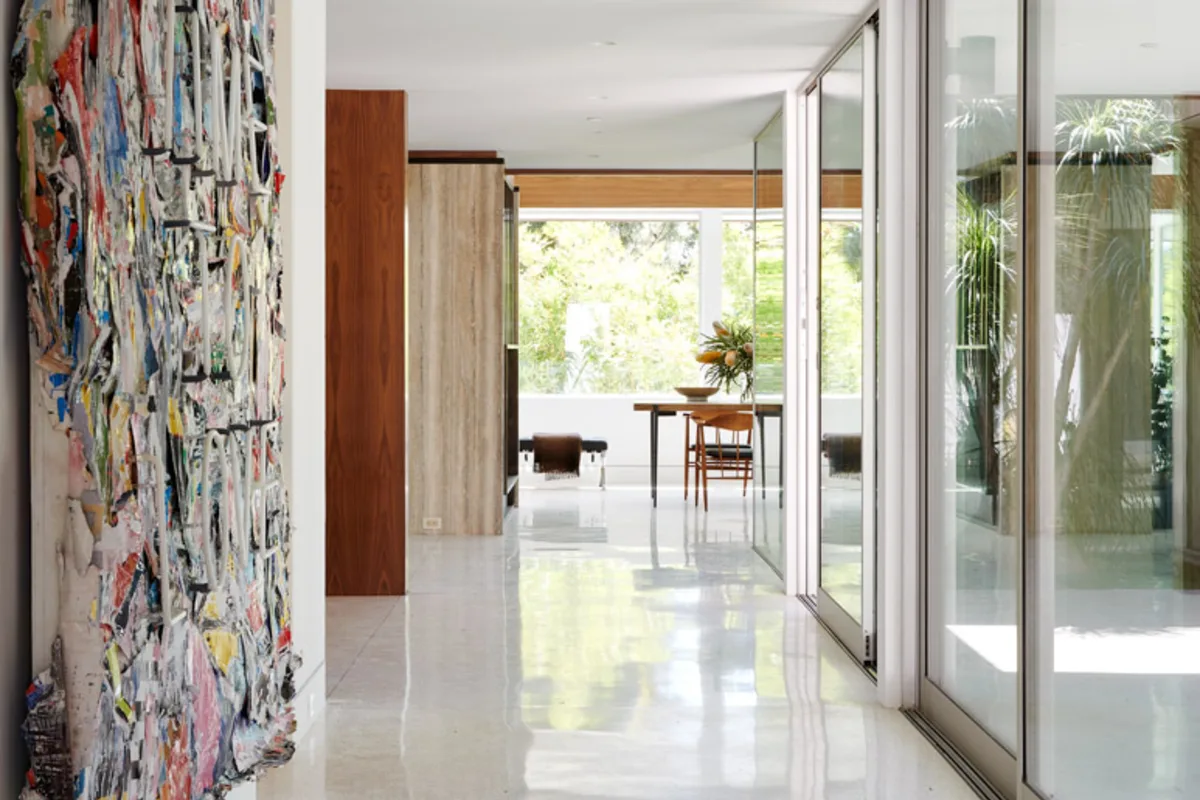
Terrazzo is a trade with a documented migration. The National Terrazzo and Mosaic Association’s history calls it “an artisanal craft whose roots dated back to 16th century Venice,” and says that “The introduction of the electric grinding machine around 1919 influenced the spread of terrazzo all over the US.” In the 1920s, it adds, many Italian terrazzo workers reached the United States from towns in Friuli, among them Sequals, Fanna, Arba and Cavasso Nuovo.
Whoever specifies a terrazzo floor has chosen a trade over a product. A floor is made by a person, and a person has to be found.
Steel windows and the shop that closed
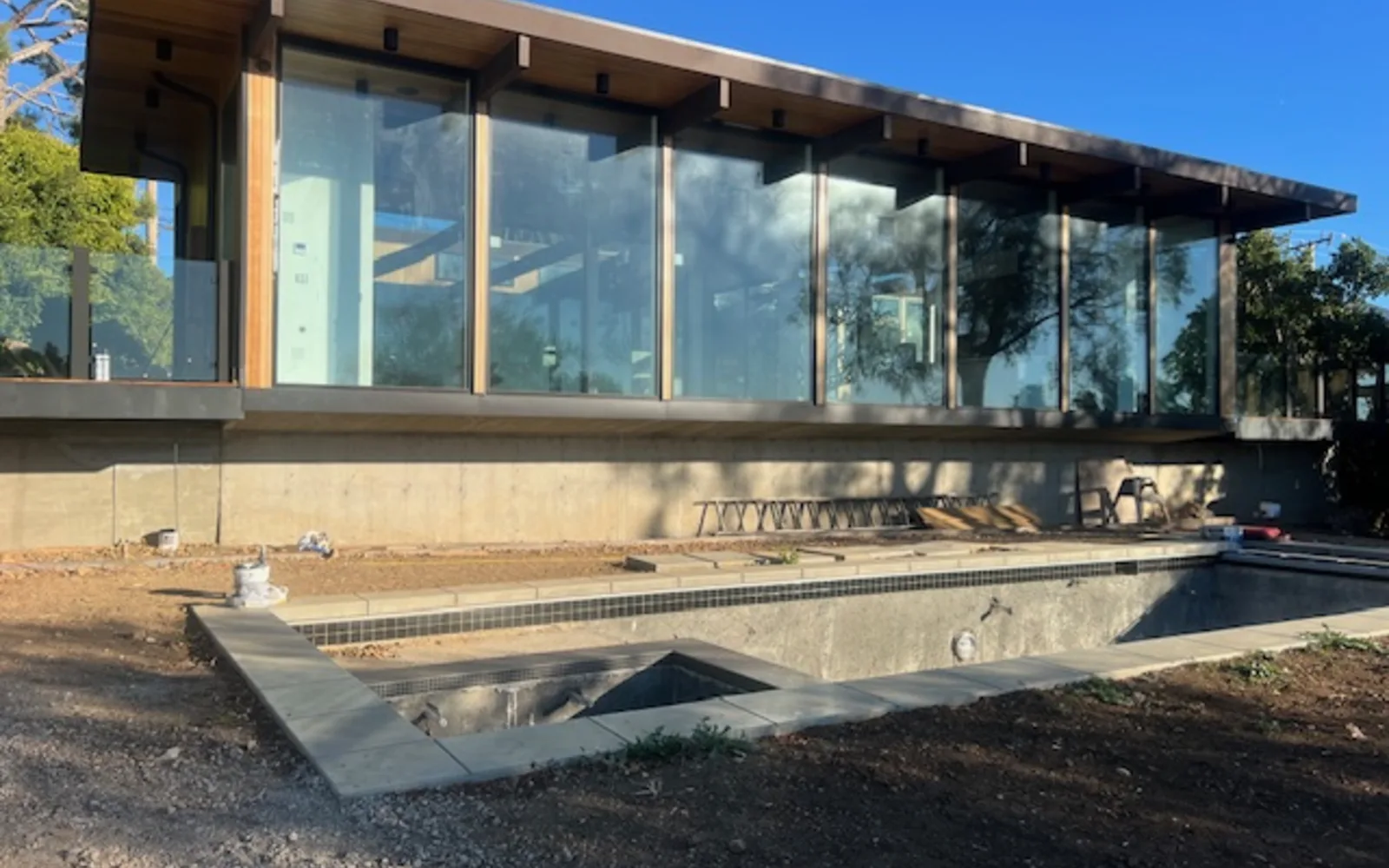
The Mid-Century Modern house is, among other things, a house of thin steel. The slim sash and the walls of glass depend on frames that were fabricated, not ordered. The National Park Service’s Preservation Brief on historic steel windows, by Sharon C. Park, AIA, sets out the repair: bent sections are “straightened with heat and applied pressure in a workshop,” weakened sections are cut out and replaced with welded sections, and the welds are ground smooth. It warns that finding replacement metal sections may be difficult, and it says zinc-rich primers are generally recommended.
The Brief covers steel windows of 1890 to 1950, so it describes the family of repairs rather than any one house. It also shows how much of the work is done by hand, in a shop, by someone who has done it before.
The finish carpenter, and the closet nobody sees
Finish carpentry is the most exposed to the eye: a wall panel or a cabinet door either meets its neighbor cleanly or does not. HOUS., which covered the sale of Casa Kuderna, names one carpenter: Timothy Brooks, who worked on the closets, where the pulls are by George Nelson and the drawers close softly.
That the credit appears at all, in a listing feature, is itself informative. The people who build these rooms usually go unnamed.
The house that was rebuilt from its drawings
Casa Kuderna, at 2977 Passmore Drive in Los Angeles, is a case in which the drawings and the hands met. Craig Ellwood, the architect of three houses in the Case Study House Program, designed it with James Tyler in 1956 for Charles Kuderna, a corporate illustrator. HOUS. wrote that by the time it came to market the house “was begging for architectural mercy.”
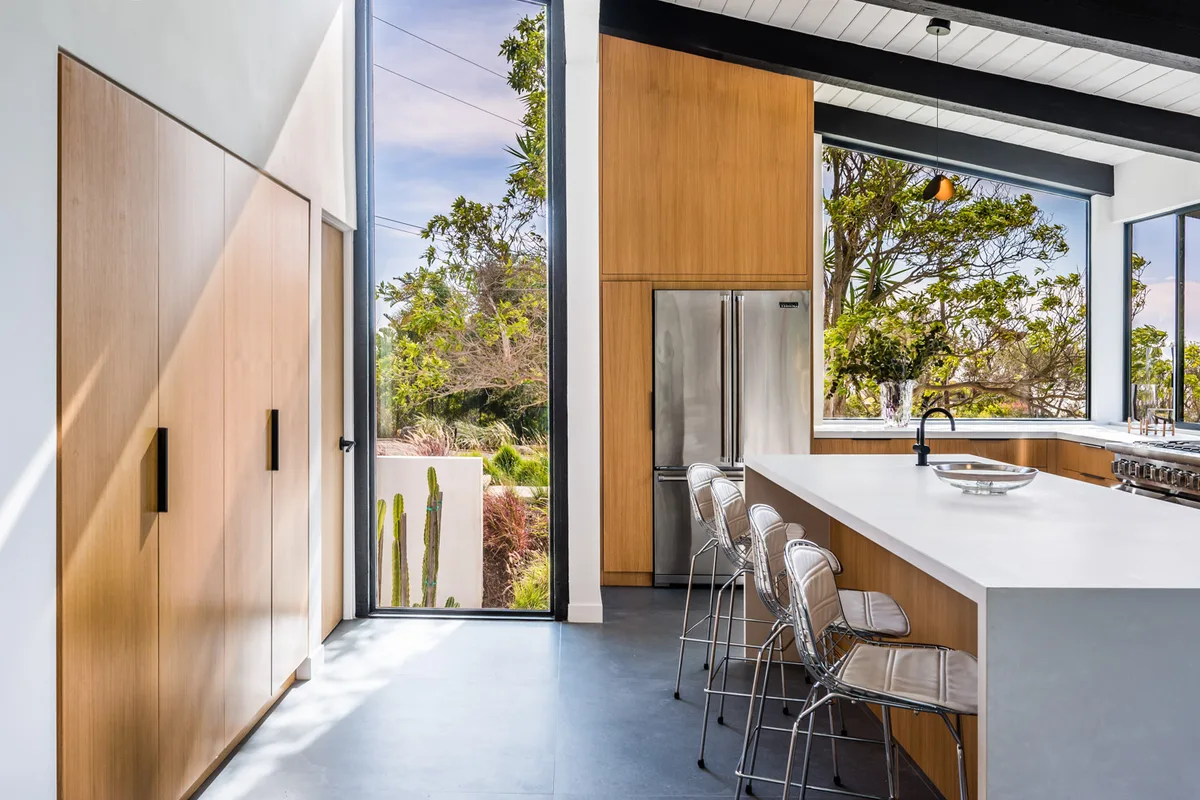
Philippe Naouri bought the house in 2018 and restored it from the archives of James Tyler, working with the archivist Barton Jahncke. The additions came off. The yellow exterior spiral stairs, the windows and the woodwork were restored. The jalousie windows, the brick-and-steel fireplace and the glass walls are original and stayed. What was added is a short list of materials: hand-poured terrazzo, walnut-clad walls, and George Nelson pulls on new joinery. The program is a two-bedroom main house and a one-bedroom guest house over the carport, on two gated hillside parcels of almost three-quarters of an acre above the Cahuenga Pass.
HOUS. quotes Naouri on the result as “an architectural piece to live in just the right size.” Robb Report covered the house in April 2024. The archive tells you what was drawn; only a trade can tell you how it was made.
Who is left
Say what can be said honestly. The drawings of these houses are better preserved than the knowledge needed to build from them, and every restoration is, at some level, a search for hands: the plasterer who still floats a wall, the setter who still makes terrazzo, the welder who can cut out a corroded section of a mullion and make the repair invisible. How many such people remain in Southern California is not known from this reporting, and it is the right question for the next one.
What a homeowner can do is simpler. Ask who will do the work before asking what it will cost. Ask to see the last three jobs of the same kind. And treat the drawings and the people as one asset, because without both the house is a copy.
Sources
- Preservation Brief 21: Repairing Historic Flat Plaster (opens in a new tab), National Park Service
- Preservation Brief 13: The Repair and Thermal Upgrading of Historic Steel Windows (opens in a new tab), National Park Service
- History of NTMA (opens in a new tab), National Terrazzo & Mosaic Association
- Craig Ellwood Casa Kuderna midcentury house for sale (opens in a new tab), HOUS.
- Casa Kuderna by Craig Ellwood (opens in a new tab), Dwell
- Casa Kuderna house, Los Angeles (opens in a new tab), Robb Report