Collected interiors2 min read
Hans J. Wegner’s 1951 Papa Bear Chair at Loma Vista
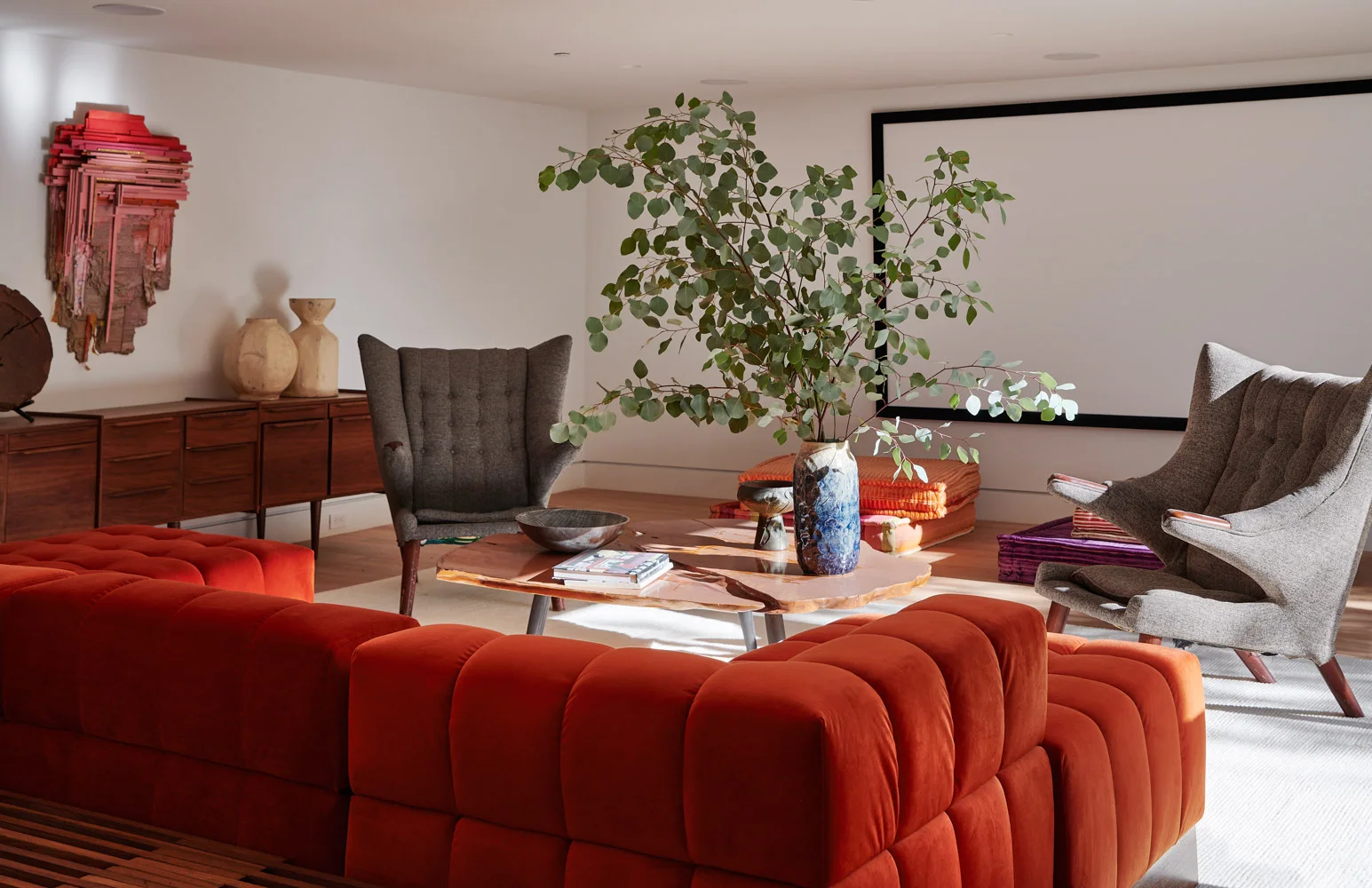
Hans J. Wegner, a cobbler’s son from Tønder, drew almost five hundred chairs. Original Papa Bear chairs, a 1951 design, furnish the media room at Loma Vista.
Hans J. Wegner was born in Tønder, in southern Denmark, in 1914, the son of a cobbler. His manufacturer Carl Hansen & Søn records that “by the age of 18, he had completed four years of training as a cabinetmaker with H. F. Stahlberg.” He studied at the School of Arts and Crafts in Copenhagen from 1936 to 1938, and in 1938 went to Aarhus to work with Arne Jacobsen and Erik Møller on the furniture for the new City Hall. In 1943 he opened his own studio. By the time he died, in 2007, he had designed almost five hundred chairs.
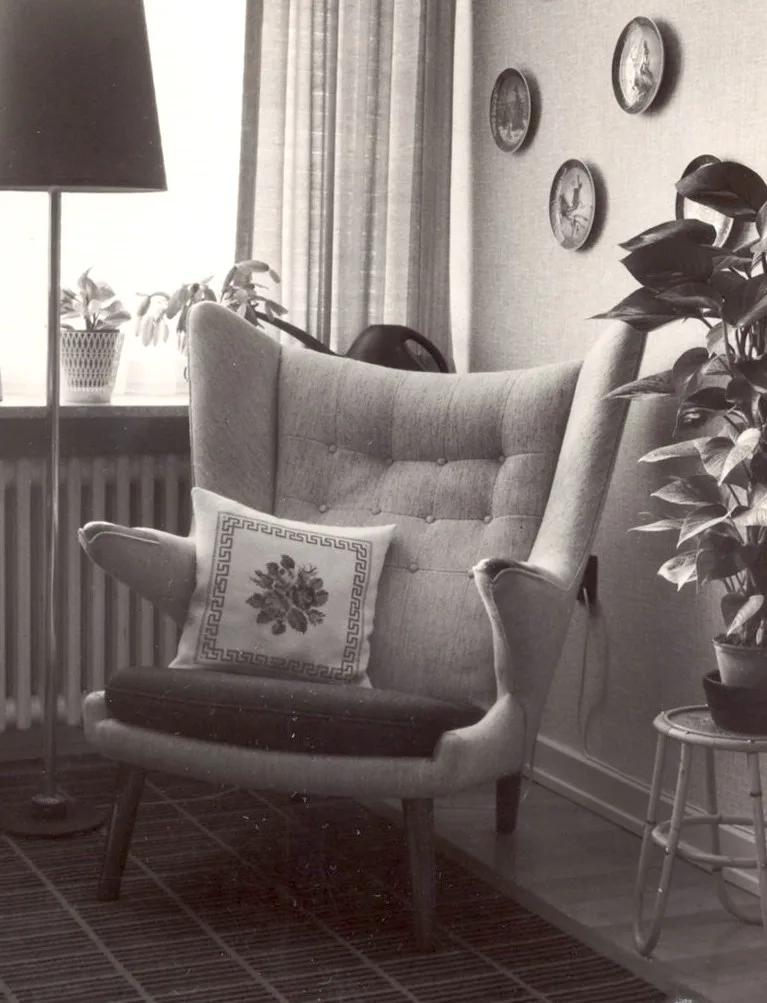
A Chair with No Backside
Wegner’s rule for a chair was short. “A chair is to have no backside,” Dwell quotes him. “It should be beautiful from all angles.”
Carl Hansen & Søn describes his method as “a continuous process of purification and simplification.” The Wishbone chair, in production there since 1950, is made of little more than bent wood and a woven seat. In 1951 Wegner won both the Lunning Prize and the Grand Prix of the Milan Triennale.
The Papa Bear, 1951
The same year he drew a chair that seems to contradict all of it. The Papa Bear, 1951, is deep, upholstered and wide, with arms that reach forward and end in wooden paws. PP Møbler, which began making its frames in 1953, its first Wegner design, calls it “the archetype for a comfortable easy chair.”
PP Møbler lists what goes into the upholstery: “cotton, palm leaves, flax fibre, horsehair, and of course metal springs,” with a minimum of two weeks of hand work in every chair. The company still makes the chair, as the PP19.
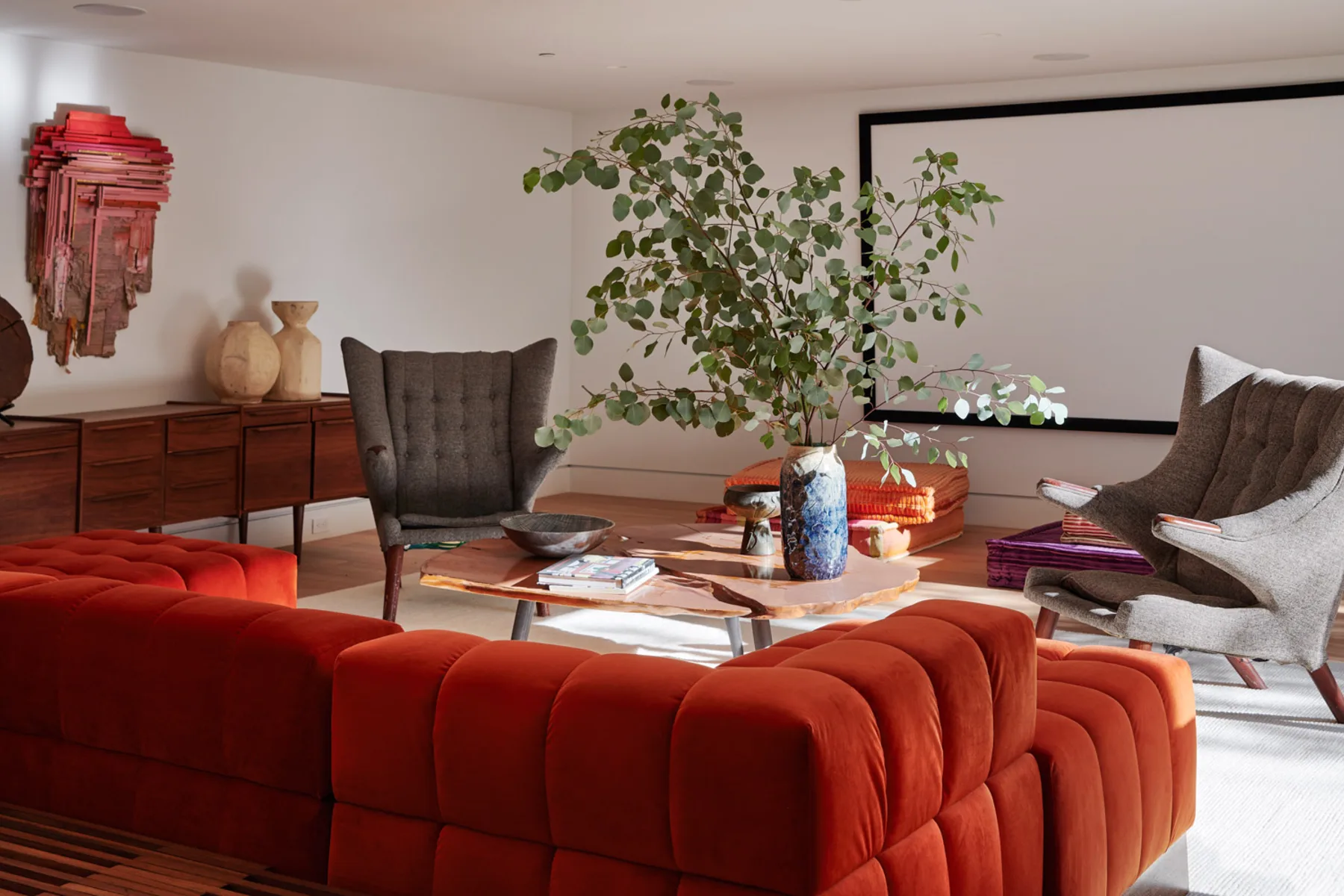
The Media Room at Loma Vista
At Loma Vista, Rex Lotery’s 1959 house in Beverly Hills, the media room holds two original Papa Bear chairs, upholstered in grey. They stand either side of a low walnut table by George Nakashima, before Mario Bellini’s long, low Camaleonda sofa.
Sources
- Hans J. Wegner (opens in a new tab), Carl Hansen & Søn
- PP19 Papa Bear Chair (opens in a new tab), PP Møbler
- Hans Wegner’s iconic chairs (opens in a new tab), Dwell
- The Interior (opens in a new tab), Philippe Naouri Studio