Collected interiors2 min read
George Nakashima’s Free Edge: From an Idaho Camp to a Pennsylvania Workshop
Interned in Idaho in 1942, George Nakashima learned Japanese joinery there and built a Pennsylvania workshop that still stands. His walnut low table is at Loma Vista.
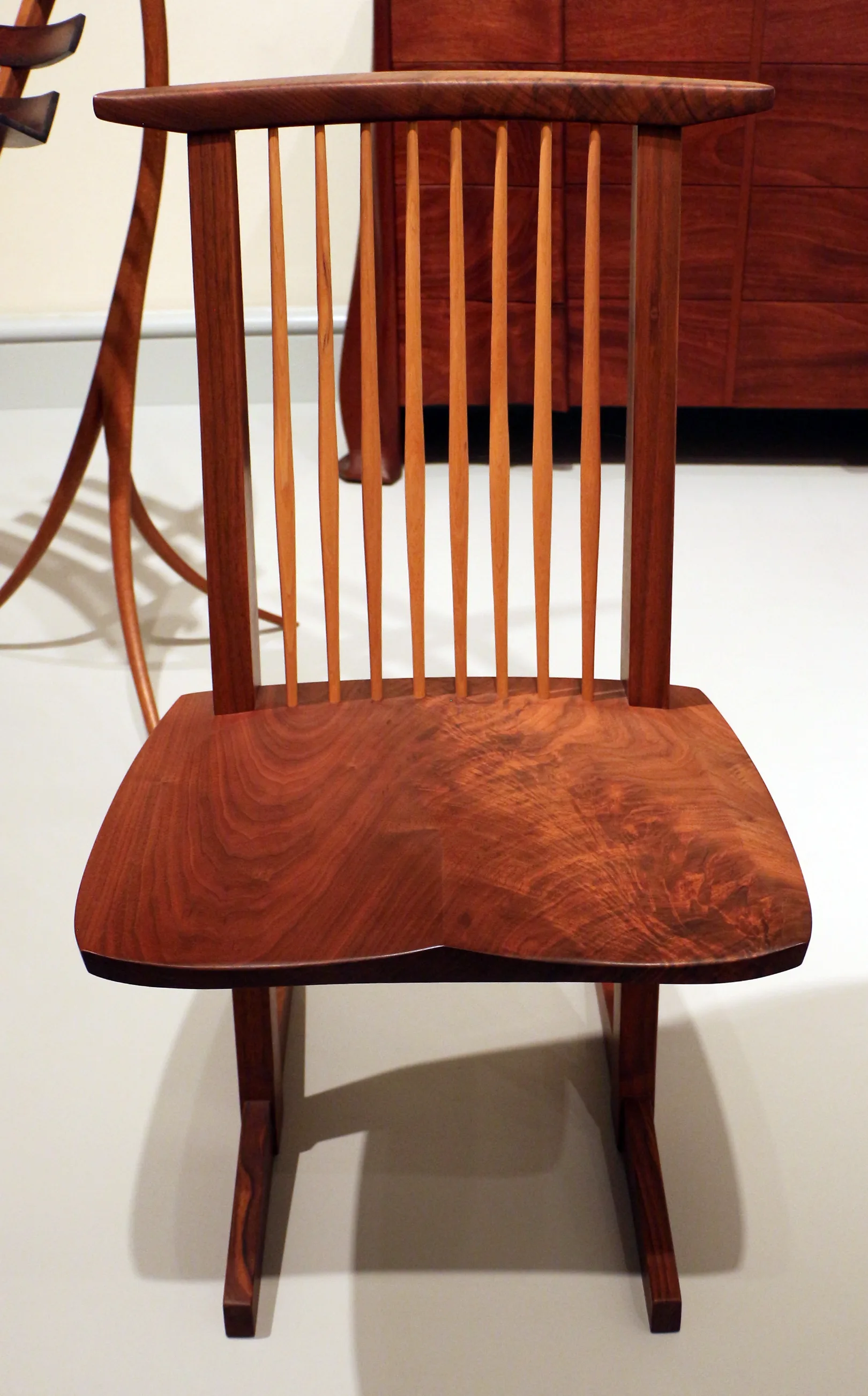
George Nakashima kept the shape of the tree. Knoll quotes his daughter Mira, who says he “retained a tree’s shape and color and used the original form as part of his creative process,” and that what some might call imperfections were, for him, “as if the tree was speaking.”
Spokane, Minidoka, New Hope
Nakashima was born in Spokane, Washington, in 1905. In 1942 he was sent to the Minidoka camp in Idaho, one of the ten centres where the United States held Japanese Americans during the war. The National Park Service records that there he met Gentaro Hikogawa, “who taught him the techniques of traditional Japanese woodworking.”
In 1943 the architect Antonin Raymond sponsored his release. The Raymonds had to list him as a farm worker, because, in the words of Pennsylvania’s historic preservation office, “agricultural workers were one of the few categories acceptable for sponsorship.” His first workshop was their former milk house in New Hope, Pennsylvania. In 1946 he designed and built his own workshop and house on three acres nearby.
The place grew with the work. The Park Service counts “21 buildings, all designed by Nakashima” on the twelve-acre site, among them the Conoid Studio of 1957, named for its conoid roof. The complex became a National Historic Landmark in 2014. Nakashima died in New Hope in 1990.
The Soul of a Tree
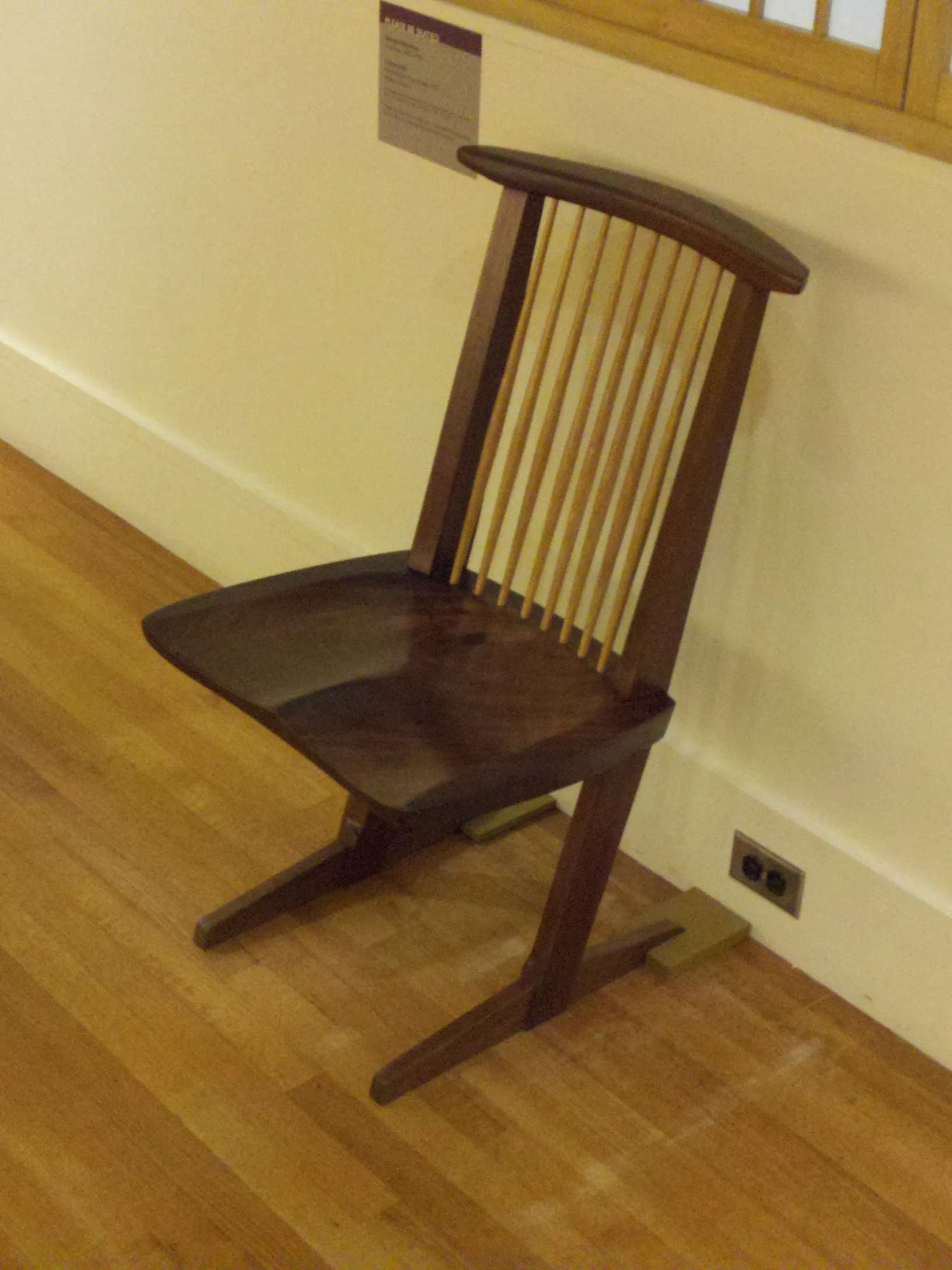
“There must be a union between the spirit in wood and the spirit in man,” Nakashima said, as Knoll records. The Chipstone study of his life says he “sought nothing less than to release the soul of a tree with his furniture.”
To join planks, or to steady uneven grain where a tree forked, he set an inlaid butterfly into the wood, a small key across the joint. Chipstone calls the butterfly “a Nakashima icon.”
In 1946 he made two designs for Knoll. The tables people picture now, the slabs with their natural edge, came out of New Hope one at a time. His family still runs the workshop, and its own history keeps his rule: “Furniture should be lived with and not treated as something overly precious.”
The Table at Loma Vista
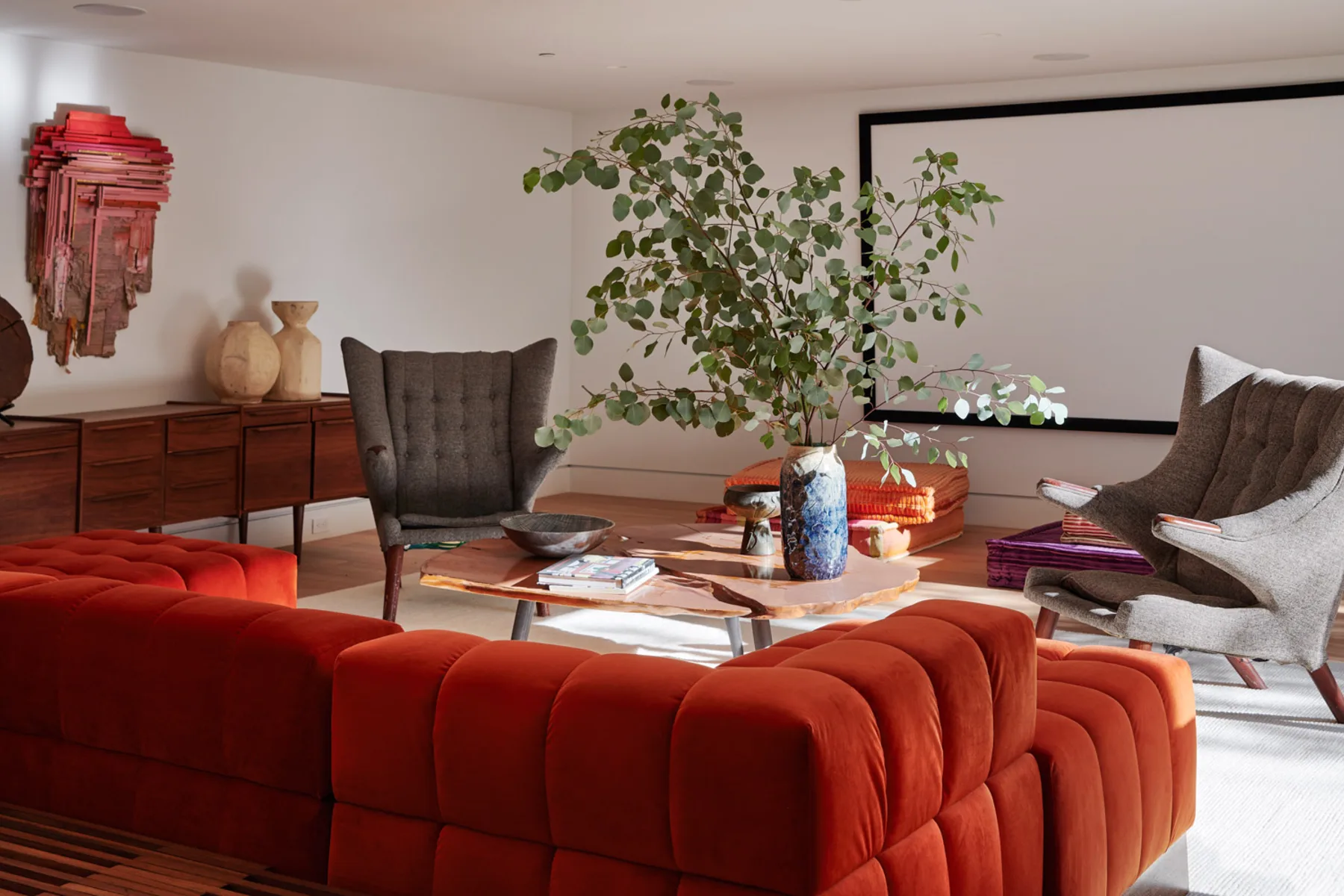
In the media room at Loma Vista there is an original Nakashima low table in walnut, its edge left as the tree gave it. It stands between Hans J. Wegner’s two Papa Bear chairs, in front of Mario Bellini’s Camaleonda sofa.
Sources
- George Nakashima Woodworker Complex (opens in a new tab), National Park Service
- George Nakashima (opens in a new tab), Smithsonian American Art Museum
- George Nakashima Woodworker’s property: National Historic Landmark (opens in a new tab), Pennsylvania Historic Preservation
- George Nakashima studio (opens in a new tab), Knoll
- Nature, Form, and Spirit: The Life and Legacy of George Nakashima (opens in a new tab), Chipstone, American Furniture 2004
- History and team (opens in a new tab), Nakashima Woodworkers
- The Interior (opens in a new tab), Philippe Naouri Studio